


Insights on AI-Powered
Engineering Management
Latest thoughts on building agentic software teams, implementing guardrails for AI development, and scaling engineering operations.
A System of Work for Decisions
A field guide for software teams whose agents write the code. AI is making every codebase more complex and giving every company more codebases to maintain. Code got cheap and decisions did not, so teams need one place where the rules of each codebase are discovered, reviewed, filtered and enforced, and software factories that build on it.
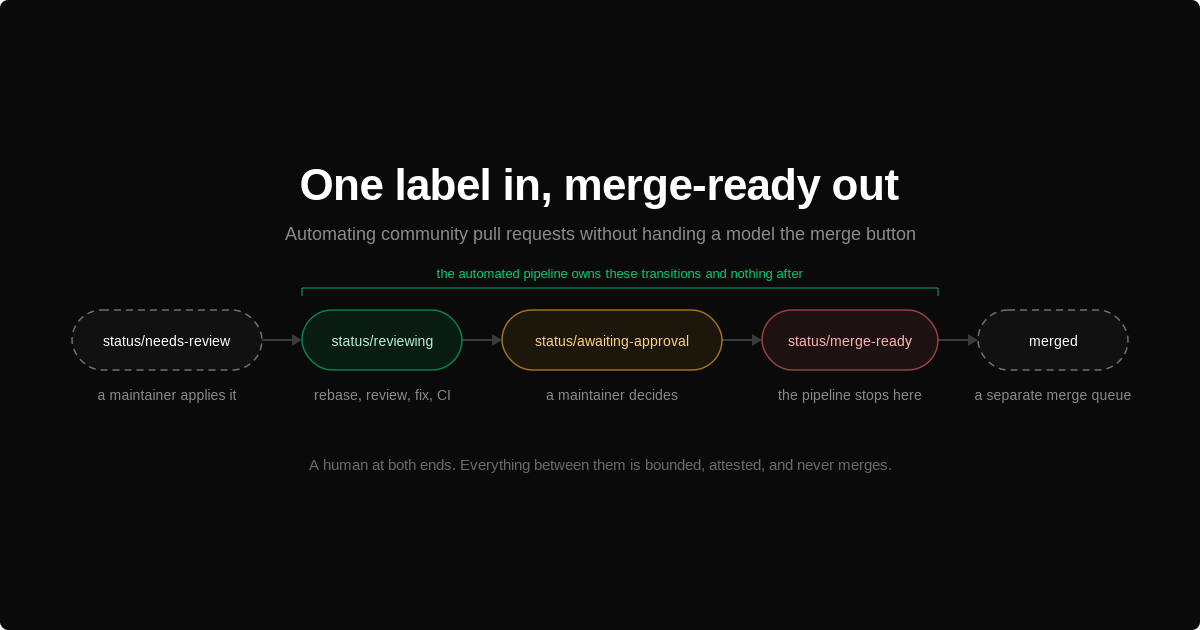
One Label In, Merge-Ready Out: Automating Community PRs
Community pull requests are where open source maintainers burn out. A walk through one production workflow that adopts a contributor's PR with a single label, reviews it with two model families, fixes what it finds, and still stops for a human before anything merges.
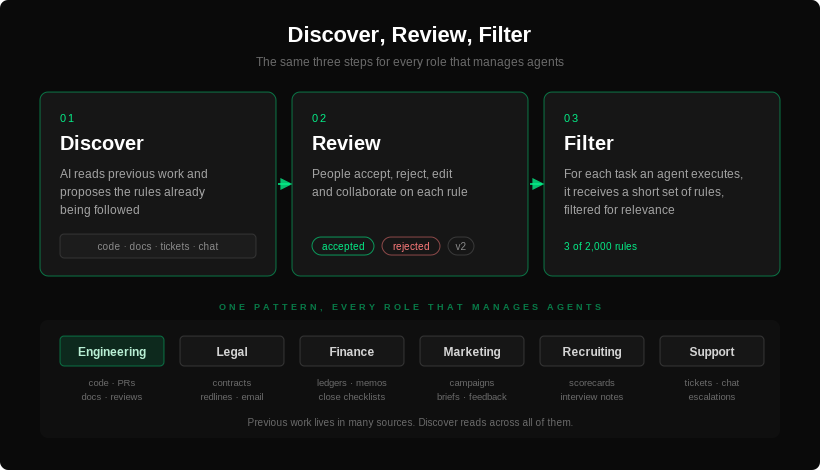
Discover, Review, Filter: How Every Role Will Manage Agents
If every white-collar role will manage agents, if agents are managed with rules rather than one-off decisions, and if people can't recall the rules they actually use, then every role needs the same system: AI reads previous work and proposes the rules already being followed, people review them, and each agent task gets a short set of rules filtered for relevance.
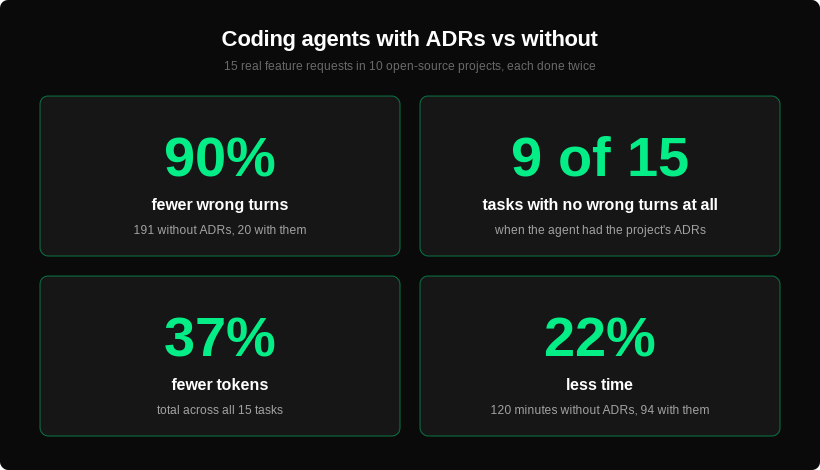
What Happens When Coding Agents Read Your ADRs
We gave coding agents 15 real feature requests in 10 open-source projects, once without Architecture Decision Records and once with them. With ADRs, wrong turns fell about 90% (from 191 to 20), nine of the 15 tasks had none at all, the agent used 37% fewer tokens, and total time fell 22%.
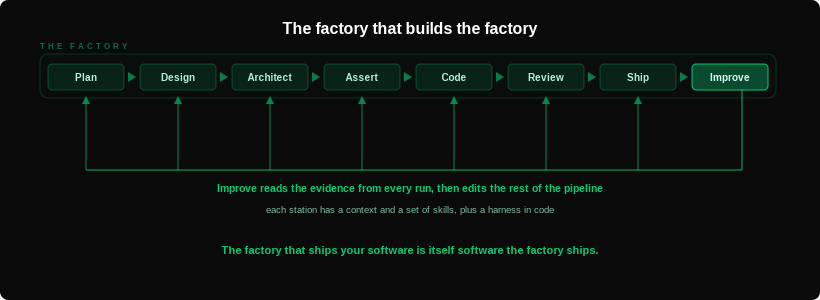
The Enterprise Software Factory: Why AI Is Changing More Than How We Write Code
AI made writing code faster, yet roadmaps still slip. The bottleneck was never writing code—it was coordinating everything around it. Why enterprises are shifting from optimizing the developer to building a software factory.
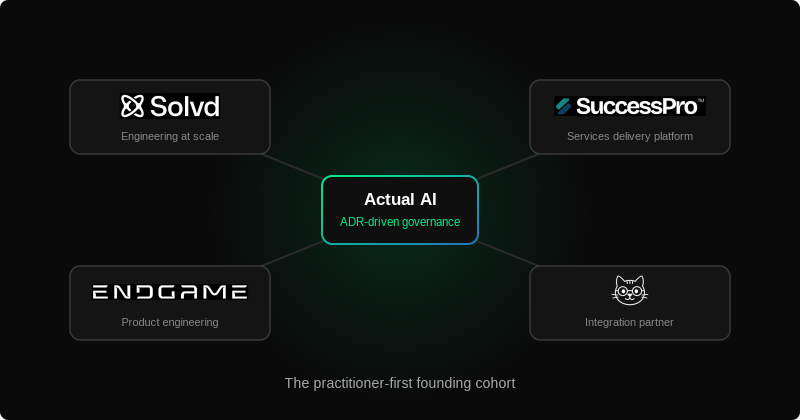
We Built a Partner Program Before We Built a Sales Team
The architectural governance gap shows up first in the fastest teams. Why we recruited the consultancies and platform builders who feel it daily before hiring a single seller, and meet the founding partner cohort: Solvd, SuccessPro, ENDGAME, and Spec Kitty.
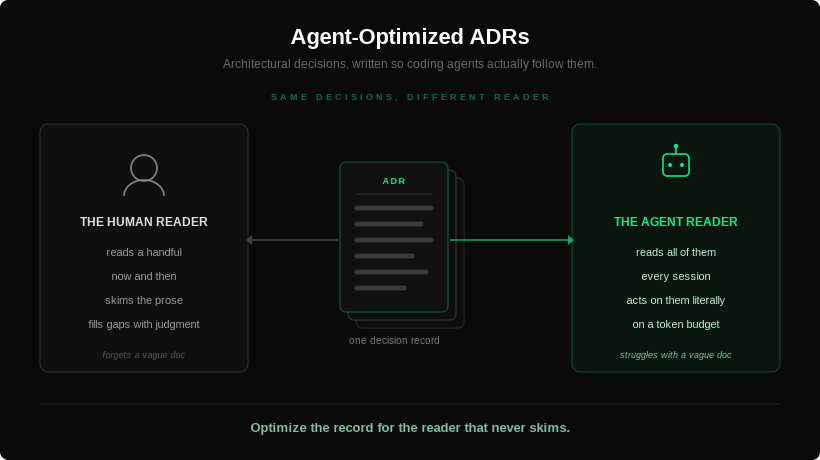
ADRs for Coding Agents: Architectural Context, Optimized
How to write Architecture Decision Records (ADRs) for coding agents: scoped, imperative, verifiable context they read every session and act on.
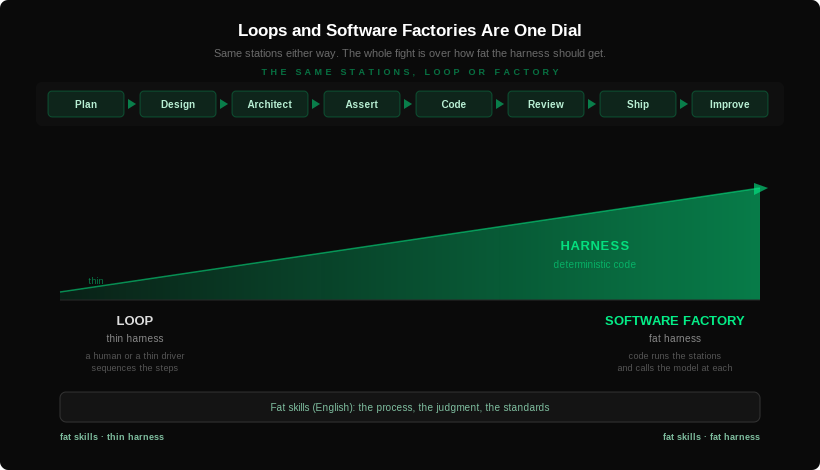
Your Software Factory Should Build Itself
Thin harness or fat, loop or factory, both camps are arguing about lines of code while the real question moved up a level: the factory that ships your software should itself be software the factory ships.
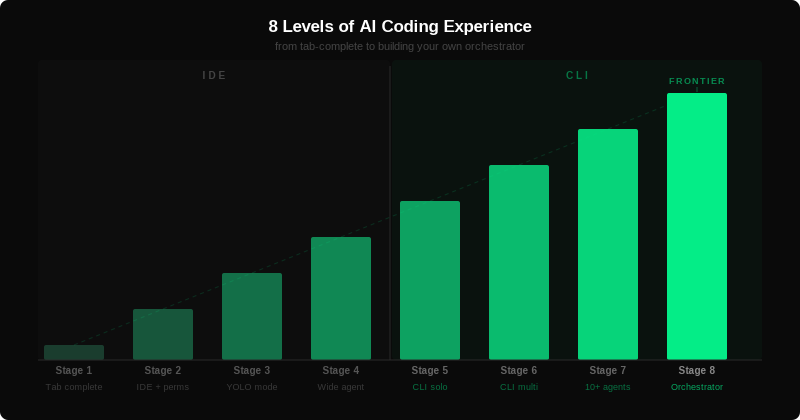
The 8 Levels of AI Coding Experience
Where are you on the AI coding spectrum? From tab-complete skeptic to orchestrator builder, Steve Yegge's framework maps the journey, with specific tools and habits at every stage.
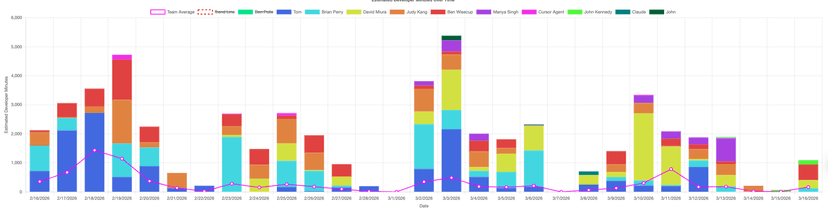
Estimated Developer Minutes: A Simple Way to Measure What AI Actually Produces
Estimated Developer Minutes (EDM) asks one question: how long would a human developer take to write this code? Inspired by Stanford research, it's how Actual AI measures real AI productivity.
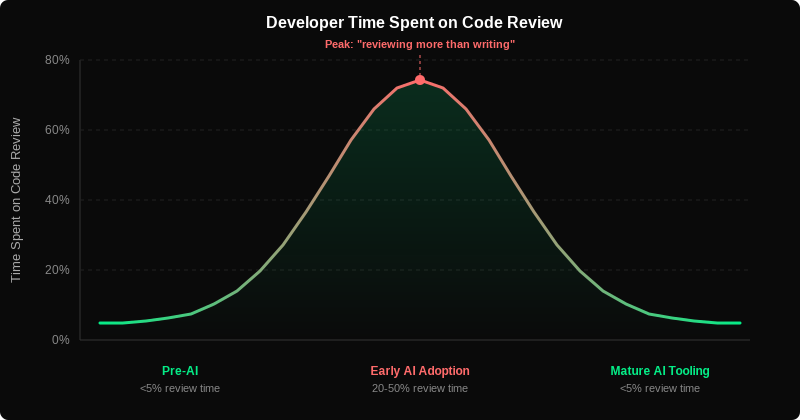
The Rise and Fall of Code Review
Code review went from an afterthought to half the job and back again. Our survey data tracks the parabola in real time.
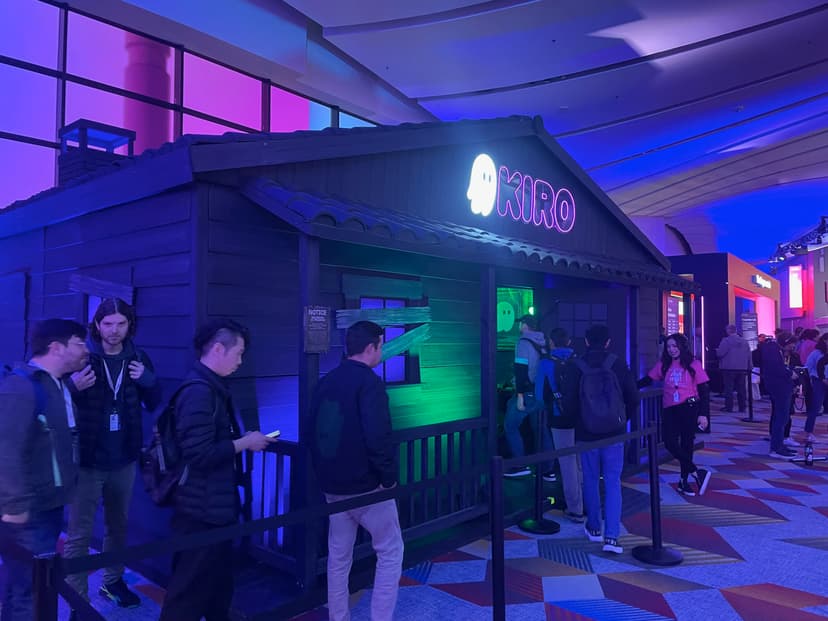
From Vibe-Coding to Specs: How Junior Developers Are Finding Their Place in AI Teams
AWS Kiro and spec-driven development are reshaping how junior developers contribute to AI-enabled software teams, moving beyond the senior developer advantage.
Stay Updated
Get the latest insights on AI-powered engineering management, agentic development, and building high-performing software teams.